In Piney Point Village, Your Backyard Oak Isn't Fully Yours
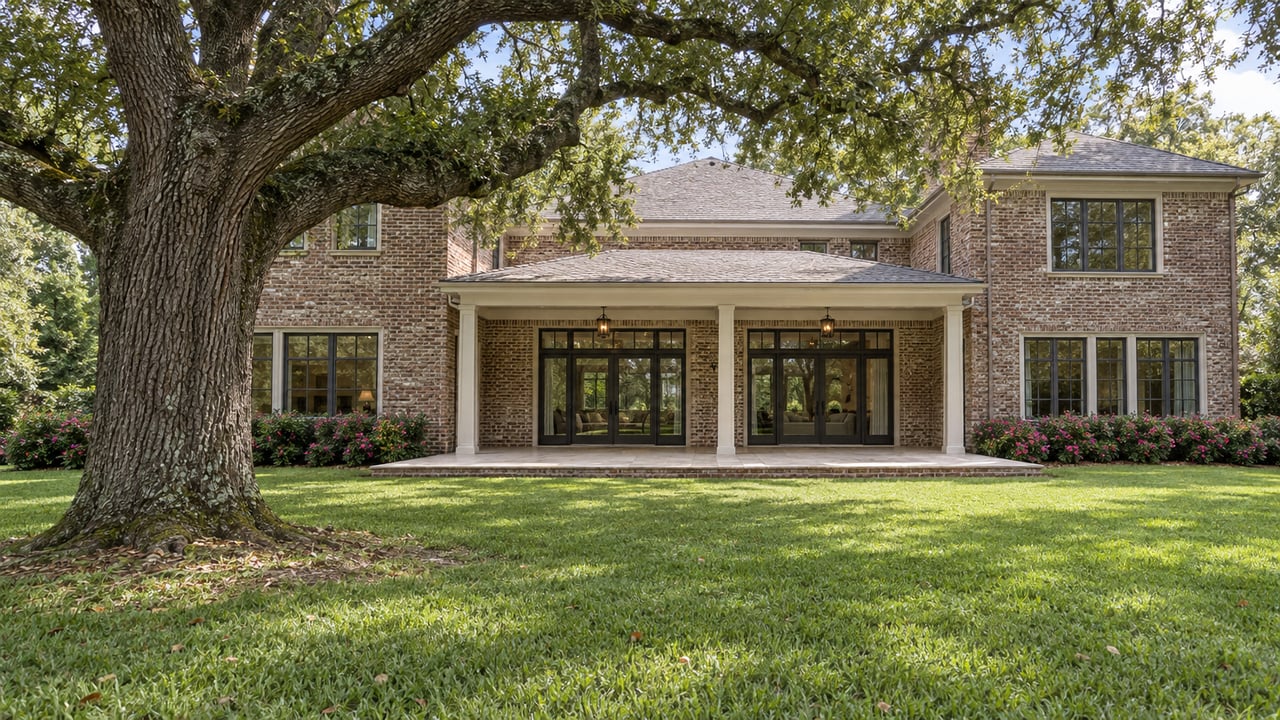
The city's own FAQ page puts the question plainly: "Why do I need a permit to cut down my own tree?" It is the kind of question that only gets written down because enough residents have asked it, usually right after a storm has dropped a limb across the driveway and they've called a tree service expecting a same-day cleanup.
In Piney Point Village, that call is the first step in a process, not the whole job. The city's Tree Ordinance covers trees on public and private property alike, which means the oak in your side yard falls under the same review as the ones lining the street. For a village of roughly 3,200 people built almost entirely on single-family lots, that is an unusual amount of civic attention to spend on something most cities treat as a homeowner's business alone.
Piney Point takes its name from the pine trees that marked the San Felipe-to-Harrisburg Trail before Houston was even founded in 1836, according to city administrator Bobby Pennington's account to the Houston Chronicle. German farmers settled the area in the 1820s, a sawmill operated nearby by the 1930s, and when Houston began annexing its surroundings in the 1950s, Piney Point incorporated instead, adopting business restrictions that still hold: no commercial parcels within city limits, no multifamily housing, and a minimum lot size of 40,000 square feet for new construction, with some smaller legacy properties grandfathered in.
That combination, big lots and no commercial development, left room for a tree canopy to mature undisturbed for seven decades. Buffalo Bayou forms the village's southern edge, and the wooded strip along it has never had to compete with a strip mall or an apartment complex for space. The canopy is not a decorative feature of the neighborhood. It is close to the entire built environment outside the houses themselves.
Protecting that much tree cover on private land requires paperwork most homeowners never encounter elsewhere. The city's Tree Criteria Manual lays out what a Tree Disposition Plan has to include before removal or major construction can proceed:
Once those tags go up, they are not decorative either. The plan itself states in plain language that removing the fencing or the tags carries a fine of up to $500, and the job can be shut down until it is corrected. For a homeowner planning a renovation or a new build, that means the tree survey happens before the architect's plans get very far, not after.
The person who reviews all of this, Urban Forester Cary Moran, is a part-time contract employee available only on Tuesdays and Thursdays, and only by appointment. That schedule works fine for a planned renovation, where a homeowner can book time weeks in advance. It matters more the day a live oak splits after a summer storm and the branch is resting on a fence line at 4 p.m. on a Friday.
The city draws a distinction here that is worth knowing before you need it. A tree or limb that is actively creating a dangerous situation gets routed through City Hall's main line for immediate response. Anything short of an emergency, a dead tree you want gone before hurricane season, a healthy oak in the way of a pool addition, goes through the forester's routine schedule instead. Knowing which line to call, and when, is the difference between a same-week resolution and a wait until the next Tuesday.
The city has held Tree City USA recognition for 14 consecutive years, a distinction that requires a municipality to maintain a tree board, a public tree care ordinance, and a documented forestry budget year after year, not just plant a few saplings for a photo. Piney Point's version of that ordinance is unusually strict because it reaches onto private lots, and the visible result is a canopy that reads as continuous rather than patchy, block to block, decade to decade.
That continuity has a side effect residents notice on their own streets. A Houston Chronicle account traces the peafowl that wander parts of west Houston to a flock kept at Vargo's, a garden restaurant that opened on Fondren near Woodway in 1965 and used the birds, alongside ducks, swans, and geese, as part of its landscaping. The flock multiplied through the 1980s, and after a 1991 citation over how close the birds could legally roam to residences, some found their way past the restaurant's fencing for good. Vargo's closed and was razed in 2013, but the birds it left behind never really did. A Houston Chronicle photographer documented one wandering a Piney Point residential street in April 2025, and the reason they've stuck around this particular stretch of west Houston is not mysterious. Peafowl roost high in mature trees to stay clear of ground predators, and Piney Point's continuous canopy offers abundant high perches.
None of this is a dormant rule from 1955 that nobody enforces anymore. City council minutes from this spring show the same government still actively managing tree-adjacent infrastructure, including an ongoing drainage project along Windermere Lane where a resident raised concerns directly with the council about construction access and easement alignment. The forester's schedule, the tape colors, the fine language, all of it is administered by a working city government in 2026, not inherited paperwork nobody reads.
If you're planning work on a tree in Piney Point Village, the city's Urban Forester page lists current contact information, and the Tree Disposition Plan form shows exactly what a survey needs to include before you call anyone out to your property.
At Beth Wolff Realtors, we spend enough time in Piney Point Village to know that a renovation timeline here often runs through the forester's calendar before it runs through a contractor's. If you're weighing work on a property in the village, or just want a clearer sense of what a lot's tree canopy means for future plans, request a personalized consultation and we'll walk through it with you.
This article is general information, not legal, tax or financial advice. Consult a qualified professional about your situation.
Stay up to date on the latest real estate trends.
October 15, 2026
October 8, 2026
October 1, 2026
September 24, 2026
September 17, 2026

September 10, 2026
September 3, 2026
August 27, 2026
August 20, 2026